

v. 15, no. 5
Dental Press Journal of Orthodontics – ISSN 2176-9451
Dental Press J. Orthod.
v. 15, no. 5
September / October
2010
Editorial
The evolution of imaging diagnostics for Orthodontics
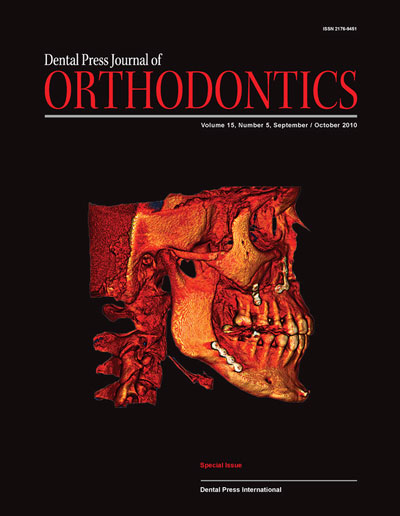
In the 1970s, the electronic technologies deployed for space exploration launched a veritable revolution in imaging diagnostics capacity?especially in the field of computer tomography. It is curious to note that before we were able to delve deeper into the human body we had to first travel into space.
This giant leap rapidly spread to encompass several areas, as equipment improved and new applications were developed. For example, contrasts are now used to show the path of blood vessels, and once scanning became fast enough, we acquired the ability to capture a still image of the heart to assess possible coronary stenoses.
A major technological advance was achieved with the development of Cone-Beam Computed Tomography, better known by the English acronym CBCT. This tomograph boasts unique features far superior to a conventional CT scanner. The apparatus is more compact and produces fewer artifacts on metal objects, while its radiation dose is about 15 times milder than that of a conventional CT scanner. These features have made it an outstanding resource in Dentistry, and help to explain its current worldwide use.
The distance traveled by imaging diagnostics technology has been remarkable, and this journey has given us a fresh insight into Orthodontics. We therefore decided to organize a special anniversary edition comprising exclusively articles related to imaging diagnostics. Dr. Telma Martins de Araujo's contribution as associate editor of the journal proved invaluable in making this issue come to fruition. She aimed at a format that would feel as closely as possible like reading a book. As a result, in one single issue, readers can enjoy a multifarious, in-depth view of the role of imaging in Orthodontics.
What´s new in Dentistry
Digital impressions and handling of digital models: The future of Dentistry
Introduction
New digital impression methods are currently available in the market, and soon the long-awaited dream of sparing patients one of the most unpleasant experiences in dental clinics, the taking of dental impressions, will be replaced by intraoral digital scanning.
Both in orthodontics and restorative area (prosthodontics and restorative dentistry in particular), the use of plaster models is not only essential but routine practice in these clinical specialties. It has long been every dentist?s desire to be able to scan plaster models, or even patients? teeth directly in the mouth. Avoiding discomfort, speeding up work, improving communication between colleagues and prosthetic labs, and reducing the physical space needed for storing these models, are some of the alleged benefits of this technology.
Interview
An interview with Lucia Helena Soares Cevidanes
• Dentistry Graduate, Federal University of Goiás, 1989.
• MSc in Orthodontics, Methodist Institute for Higher Education, 1994.
• PhD in Oral Biology, University of North Carolina at Chapel Hill, 2003.
• Assistant Professor, Department of Orthodontics, University of North Carolina at Chapel Hill.
• Diplomate, American Board of Orthodontics.
• Reviewer of the American Journal of Orthodontics and Dentofacial Orthopedics, Angle Orthodontist, Journal of Dental Research, European Journal of Oral Sciences, World Journal of Orthodontics, Orthodontics and Craniofacial Research, International Journal of Oral Maxillofacial Surgery, and Dentomaxillofacial Radiology.
• Thomas M. Graber Award of Special Merit by the American Association of Orthodontists, 2004.
• B. F. and Helen Dewel Award for best clinical article published in 2005 in the American Journal of Orthodontics and Dentofacial Orthopedics.
• Teaching Award by the American Association of Orthodontics Foundation in 2008 and 2009.
Online Article
Analysis of initial movement of maxillary molars submitted to extraoral forces: a 3D study
Headgear. Finite Element Method. Tooth movement.
Methods: Maxilla, teeth set up in Class II malocclusion and equipment were modeled through variational formulation and their values represented in X, Y, Z coordinates. Simulations were performed using a PC computer and ANSYS software version 8.1. Each outer bow model reproduced force lines that ran above (ACR) (1), below (BCR) (2) and through the center of resistance (CR) (3) of the maxillary permanent molars of each Class II model. Evaluation was limited to the initial movement of molars submitted to an extraoral force of 4 Newtons.
Results: The initial distal movement of the molars, using as reference the mesial surface of the tube, was higher in the crown of the BCR model (0.47x10⁻⁶) as well as in the root of the ACR (0.32x10⁻⁶) model, causing the crown to tip distally and mesially, respectively. On the CR model, the points on the crown (0.15 x10⁻⁶) and root (0.12 x10⁻⁶) moved distally in a balanced manner, which resulted in bodily movement. In occlusal view, the crowns on all models showed a tendency towards initial distal rotation, but on the CR model this movement was very small. In the vertical direction (Z), all models displayed extrusive movement (BCR 0.18 x10⁻⁶; CR 0.62 x10⁻⁶; ACR 0.72x10⁻⁶).
Conclusions: Computer simulations of cervical-pull headgear use disclosed the presence of extrusive and distal movement, distal crown and root tipping, or bodily movement.
2D / 3D Cone-Beam CT images or conventional radiography: Which is more reliable?
Cone-Beam Computed Tomography. Radiography. Orthodontics.
Methods: The material consisted of lateral view 2D and 3D images obtained by Cone-Beam Computed Tomography printed on photo paper, and lateral cephalometric radiographs, taken in the same radiology clinic and on the same day, of two patients selected from the archives of the Specialization Program in Orthodontics, at the School of Dentistry, Fluminense Federal University (UFF). Ten students from the Specialization Program in Orthodontics at UFF identified landmarks on transparent acetate paper and measurements were made of the following cephalometric variables: ANB, FMIA, IMPA, FMA, interincisal angle, 1-NA (mm) and 1-NB (mm). Arithmetic means were then calculated, standard deviations and coefficients of variance of each variable for both patients.
Results and Conclusions: The values of the measurements taken from 3D images showed less dispersion, suggesting greater reliability when identifying some cephalometric landmarks. However, since the printed 3D images used in this study did not allow us to view intracranial landmarks, the development of specific software is required before this type of examination can be used in routine orthodontic practice.
Evaluation of referential dosages obtained by Cone-Beam Computed Tomography examinations acquired with different voxel sizes
Cone-Beam Computed Tomography. Radiation. Voxel.
Objectives: The aim of this study was to evaluate the dose?area product (DAP) and the entrance skin dose (ESD), using protocols with different voxel sizes, obtained with i-CAT Cone-Beam Computed Tomography (CBCT), to determine the best parameters based on radioprotection principles.
Methods: A pencil-type ionization chamber was used to measure the ESD and a PTW device was used to measure the DAP. Four protocols were tested: (1) 40s, 0.2 mm voxel and 46.72 mAs; (2) 40s, 0.25 mm voxel and 46.72 mAs; (3) 20s, 0.3 mm voxel and 23.87 mAs; (4) 20s, 0.4 mm voxel and 23.87 mAs. The kilovoltage remained constant (120 kVp).
Results: A significant statistical difference (p < 0.001) was found among the four protocols for both methods of radiation dosage evaluation (DAP and ESD). For DAP evaluation, protocols 2 and 3 presented a statistically significant difference, and it was not possible to detect which of the protocols for ESD evaluation promoted this result.
Conclusions: DAP and ESD are evaluation methods for radiation dose for Cone-Beam Computed Tomography, and more studies are necessary to explain such result. The voxel size alone does not affect the radiation dose in CBCT (i-CAT) examinations. The radiation dose for CBCT (i-CAT) examinations is directly related to the exposure time and milliamperes.
Original Article
Linear measurements of human permanent dental development stages using Cone-Beam Computed Tomography: A preliminary study
Tooth development. Incomplete root formation. Apexogenesis. Cone-Beam Computed Tomography. Computed tomography.
Objective: To determine the linear measurements of human permanent dentition development stages using Cone-Beam Computed Tomography.
Methods: This study was based on databases of private radiology clinics involving 18 patients (13 male and 5 female, with age ranging from 3 to 20 years). Cone-Beam Computed Tomography (CBCT) images were acquired with i-CAT system and measured with a specific function of the i-CAT software. Two hundred and thirty-eight teeth were analyzed in different development stages in the coronal and sagittal planes. The method was based on delimitation and measurement of the distance between anatomical landmarks corresponding to the development of the dental crowns and roots. These measurements allowed the development of a quantitative model to evaluate the initial and final development stages for all dental groups.
Results and Conclusions: The measurements acquired from different dental groups are in agreement with estimates of investigations previously published. CBCT images of different development stages may contribute to diagnosis, planning and outcome of treatment in various dental specialties. The dimensions of dental crowns and roots may have important clinical and research applications, constituting a noninvasive technique which contributes to in vivo studies. However, further studies are recommended to minimize methodological variables.
Skeletal displacements following mandibular advancement surgery: 3D quantitative assessment
Cone-Beam Computed Tomography. Image processing, Computer-assisted. Surgery, computer-assisted. Computer simulation. Orthodontics. Surgery, oral.
Methods: This prospective observational study used pre-surgery and post-surgery CBCT scans of 27 subjects presenting skeletal Class II with normal or horizontal growth pattern. An automatic technique of cranial base superimposition was used to assess positional and/or remodeling changes in anatomic regions of interest. Displacements were visually displayed and quantified by 3D color maps. Descriptive statistics consisted of mean values, standard deviations and minimum/maximum displacements. Changes greater than 2 mm were considered clinically relevant, and a categorization was done. Positive and negative displacements showed each region directional tendency. To test if displacements in anatomic regions were associated with each other, Pearson correlation coefficients were used under a 95% significance level.
Results: The chin moved anterior-inferiorly 6.81±3.2 mm on average and the inferior portion of the rami moved laterally (left: 2.97±2.71 mm; right: 2.34±2.35 mm). Other anatomic regions showed <2 mm mean displacements, but with evident individual variability. Significant statistical correlations were positive and moderate. The condyles, posterior border and superior portion of the rami showed a bilateral correlation, and the superior and inferior portion of the rami an ipsilateral correlation.
Conclusion: This 3D method allowed clear visualization and quantification of surgery outcomes, with an anterior-inferior chin displacement and a lateral movement on the inferior portion of the rami, but with considerable individual variability in all the evaluated anatomic regions.
Transverse effects of rapid maxillary expansion in Class II malocclusion patients:A Cone-Beam Computed Tomography study
Rapid maxillary expansion. Transverse effects. Cone-Beam Computed Tomography. Class II malocclusion.
Methods: Seventeen children (mean initial age of 10.36 years), with Class II malocclusion and skeletal constricted maxilla, underwent Haas´ protocol for RME. CBCT scans were taken before treatment (T1), at the end of the active expansion phase (T2) and after the retention period of six months (T3). The scans were managed in Dolphin software, where landmarks were marked and measured, on a coronal slice passing through the upper first molar. The paired Student´s t-test was used to identify significant differences (p < 0.05) between T2 and T1, T3 and T2, and T3 and T1.
Results: Immediately after RME, the mean increase in maxillary basal, alveolar and dental width was 1.95 mm, 4.30 mm and 6.89 mm, respectively. This was accompanied by buccal inclination of the right (7.31°) and left (6.46°) first molars. At the end of the retention period, the entire transverse dimension increased was maintained and the dentoalveolar inclination resumed.
Conclusions: The RME therapy was an effective procedure to increase transverse maxillary dimensions, at both skeletal and dentoalveolar levels, without causing inclination on anchorage molars in Class II malocclusion patients with skeletal constricted maxilla.
3D simulation of orthodontic tooth movement
Finite elements. Periodontal ligament. Tooth movement. Orthodontic forces. Axial stress.
Methods: This model encompasses the tooth, alveolar bone and periodontal ligament. It allows the simulation of different tooth movements and the establishment of centers of rotation and resistance. It limits the movement into the periodontal space, recording the direction, quantifying tooth displacement and initial stress in the periodontal ligament.
Results: By assessing tooth displacements and the areas that receive initial stress it is possible to determine the different types of tooth movement. Orthodontic forces make it possible to quantify stress magnitude in each tooth area, in the periodontal ligament and in the alveolar bone. Based on the axial stress along the periodontal ligament and the stress in the capillary blood vessel (capillary blood stress) it is theoretically possible to predict the areas where bone remodeling is likely to occur.
Conclusions: The model was validated by determining the modulus of elasticity of the periodontal ligament in a manner consistent with experimental data in the literature. The methods used in building the model enabled the creation of a complete model for a dental arch, which allows a number of simulations involving orthodontic mechanics.
Canine angulation in Class I and Class III individuals: A comparative analysis with a new method using digital images*
Mesiodistal angulation. Canine. Class III malocclusion. Class I malocclusion.
Objectives: This study aimed to determine the mesiodistal angulation of canine crowns in individuals with Class III malocclusion in comparison with Class I individuals.
Methods: Measurements were taken from digital photographs of plaster models and imported into an imaging program (Image Tool). These procedures were repeated to assess random method error (Dahlberg?s formula), and analyze reproducibility by intraclass correlation. The sample consisted of 57 patients with complete permanent dentition, untreated orthodontically and divided into two groups according to their malocclusion: Group I consisted of 33 patients with Class I malocclusion, 16 males and 17 females, mean age 27 years; Group II comprised 24 patients with Class III malocclusion, 20 males and 4 females, mean age 22 years.
Results: Random error for canine angulation ranged from 1.54 to 1.96 degrees. Statistical analysis showed that the method presented an excellent reproducibility (p < 0.01). Results for canine crown angulation showed no statistically significant difference between maxillary canines in the Class I and Class III groups, although canine angulation exhibited, on average, 2 degrees greater angulation in Class III individuals. Mandibular canines, however, displayed a statistically significant difference on both sides between Class I and Class III groups (p = 0.0009 and p = 0.0074). Compared with Class I patients, angulation in Class III patients was lower in mandibular canines and tended to follow the natural course of dentoalveolar compensation, routinely described in the literature.
Conclusion: The results suggest that dental compensation often found in literature involving the incisors region, also affects canine angulation, especially in the lower arch.
Assessment of tooth inclination in the compensatory treatment of pattern II using computed tomography
Computed Tomography. Orthodontic treatment. Tooth inclination.
Methods: Seventeen adult subjects were selected who presented with facial pattern II, Class II malocclusion, referred for compensatory orthodontic treatment. Inclinations of anterior teeth were clinically assessed using CT scans at three different times, i.e., after the use of 0.020-in (T1), 0.019 X 0.025-in (T2) and 0.021 X 0.025-in (T3) archwires. Friedman?s analysis of variance was applied with 5% significance level to compare the three assessments (T1, T2 and T3).
Results: It was noted that the rectangular wires were unable to produce any significant changes in inclination medians, except for a slight change in mandibular lateral incisors (p < 0.05). On the other hand, variations in inclination were smaller when 0.021 X 0.025-in archwires were employed, particularly in maxillary incisors (P < 0.001).
Conclusion: The use of rectangular 0.021 X 0.025-in archwires produces more homogeneous variations in the inclination of maxillary incisors, but no significant median changes.
Computed Tomographic evaluation of a young adult treated with the Herbst appliance
Temporomandibular joint. Computed Tomography. Orthopedic appliances.
Objective: To monitor and study the treatment of a patient wearing a Herbst appliance by means of Cone-Beam Computed Tomography (CBCT) images for 8 months after pubertal growth spurt. The subject was aged 16 years and 3 months and presented with a Class II, Division 1 malocclusion associated with mandibular retrognathia.
Results: The CBCT images of the temporomandibular joints suggest that the treatment resulted in the remodeling of the condyle and glenoid fossa and widening of the airway.
Conclusions: The Herbst appliance constitutes a good option for treating Class II malocclusion in young adults as it provides patients with malocclusion correction and improves their aesthetic profile.
Assessment of condylar growth by skeletal scintigraphy in patients with posterior functional crossbite
Functional posterior crossbite. Condilar growth. Skeletal scintigraphy.
Methods: Patients received endovenous injection of radioactive contrast (Technesium-99m labeling, sodium methylene diphosphate). After two hours, planar scintigraphic images were taken by means of a Gamma camera. Lateral images of the closed mouth, showing the right and left condyles, were used. An image of the 4th lumbar vertebra was also used as reference.
Results: Statistically significant differences were not found in the uptake rate values, on both sides when pre-treatment and post-treatment periods were analyzed separately and also when pre-treatment and post-treatment periods were analyzed in the same side. No differences were found in the condylar growth activity, in patients with functional posterior crossbite.
Reproducibility of bone plate thickness measurements with Cone-Beam Computed Tomography using different image acquisition protocols
Cone-Beam Computed Tomography. Alveolar bone. Reproducibility.
Objective: Assess and compare the reproducibility of buccal and lingual bone plate thickness measurements in CBCT images using different image acquisition protocols, with variations in the voxel dimension.
Methods: CBCT exams were taken of 12 dried human mandibles with voxel dimensions of 0.2, 0.3 and 0.4 mm using the i-CAT Cone-Beam 3-D Dental Imaging System. The thickness of the buccal and lingual bone plates was measured, with the i-CAT Vision software, on an axial section passing 12 mm above the right mental foramen. Intra-examiner and inter-examiner reproducibility was assessed using the paired t-test and independent t-test, respectively, with the level of significance set at 5%.
Results: Excellent inter-examiner reproducibility was observed for the three protocols analyzed. Intra-examiner reproducibility was very good, with the exception of some regions of the anterior teeth, which exhibited statistically significant differences regardless of the voxel dimensions.
Conclusion: The measurement of buccal and lingual bone plate thickness on CBCT images demonstrated good precision for voxel dimensions of 0.2, 0.3 and 0.4 mm. The reproducibility of the measurements of the anterior region of the mandible was more critical than that of the posterior region.
Assessment of pharyngeal airway space using Cone-Beam Computed Tomography
Cone-Beam Computed Tomography. Pharynx. Upper airway space.
Objectives: The purpose of this article is to enlighten orthodontists on the resources provided by CBCT in the diagnosis of possible physical barriers that can reduce upper airway permeability.
Mixed-dentition analysis: Tomography versus radiographic prediction and measurement
Mixed dentition. Cone-Beam Computed Tomography. 45-degree oblique radiograph. Plaster cast.
Methods: Measurements of mesial-distal diameters of erupted lower permanent incisors were made on plaster cast models by using a digital calliper, whereas assessment of the size of non-erupted permanent pre-molars and canines was performed by using Moyer?s table and Tanaka-Johnston?s prediction formula. For 45-degree oblique radiographs, both canines and pre-molars were measured by using the same instrument. For tomographs, the same dental units were gauged by means of Dolphin software resources.
Results: Statistic analysis revealed high agreement between tomographic and radiographic methods, and low agreement between tomographs and other methods being evaluated.
Conclusion: Cone-Beam Computed Tomography was accurate for mixed-dentition analysis in addition to presenting some advantages over compared measurement methods: observation and measurement of intra-osseous teeth individually with the possibility, however, to view them from different prospects and without superimposition of anatomical structures.
Increase in upper airway volume in patients with obstructive sleep apnea using a mandibular advancement device
Obstructive sleep apnea syndrome. Mandibular advancement device. Cone-Beam Computed Tomography.
Objective: The purpose of this study was to evaluate the effect of a mandibular advancement device (Twin Block, TB) on the volume of the upper airways by means of Cone-Beam Computed Tomography (CBCT). Sixteen patients (6 men and 10 women) with mild to moderate OSAS, mean age 47.06 years, wore a mandibular advancement device and were followed up for seven months on average.
Methods: Two CBCT scans were obtained: one with and one without the device in place. Upper airway volumes were segmented and obtained using Student?s paired t-tests for statistical analysis with 5% significance level.
Results: TB use increased the volume of the upper airways when compared with the volume attained without TB (p<0.05).
Conclusion: It can be concluded that this increased upper airway volume is associated with the use of the TB mandibular advancement device.
Mandibular condyle dimensional changes in subjects from 3 to 20 years of age using Cone-Beam Computed Tomography: A preliminary study
Mandibular condyle. Cone-Beam Computed Tomography. Morphology. Temporomandibular joint.
Introduction: Cone-Beam Computed Tomography (CBCT) imaging provides an excellent representation of the temporomandibular joint bone tissues.
Objective: The aim of this study was to investigate morphological changes of the mandibular condyle from childhood to adulthood using CBCT.
Methods: A cross-sectional study was conducted in 36 condyles of 18 subjects from 3 to 20 years of age. Condyles were scanned with the i-CAT Cone-Beam 3D imaging system and linear dimensions were measured with a specific i-CAT software function for temporomandibular joint, which permitted slices perpendicular to the condylar head, with individual correction in function of angular differences for each condyle. The greatest distances in lateral and frontal sections were considered on both left and right mandibular condyles.
Results: The linear dimension of the mandibular condyle on the lateral section varied little with growth and seemed to be established early, while the dimension of the frontal section increased. Small asymmetries between left and right condyles were common but without statistical significance for both lateral (P=0.815) and frontal (P=0.374) dimensions.
BBO Case Report
Class III malocclusion with unilateral posterior crossbite and facial asymmetry
Angle Class III. Crossbite. Facial asymmetry. Adult patient. Corrective Orthodontics.
Special Article
Alveolar bone morphology under the perspective of the computed tomography: Defining the biological limits of tooth movement
Computed tomography. Alveolar bone. Dehiscence. Orthodontics.
Introduction: Computed tomography (CT) permits the visualization of the labial/buccal and lingual alveolar bone
Objectives: This study aimed at reporting and discussing the implications of alveolar bone morphology, visualized by means of CT, on the diagnosis and orthodontic treatment plan.
Results: Adult patients may present bone dehiscences previously to orthodontic treatment, mainly at the region of the mandibular incisors. Hyperdivergent patients seems to present a thinner thickness of the labial/buccal and lingual bone plates at the level of the root apex of permanent teeth, compared to hypodivergent patients. Buccolingual tooth movement might decentralize teeth from the alveolar bone causing bone dehiscences.
Conclusion: The alveolar bone morphology constitutes a limiting factor for the orthodontic movement and should be individually considered in the orthodontic treatment planning.